Free 48/72 hours shipping – Free returns & exchanges
€30 off on orders over €200 – €50 off on orders over €400
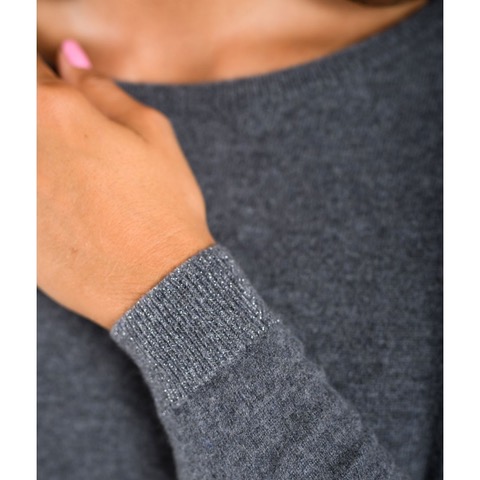
For its collections, Le Pull Français has chosen to offer the same material for all its sweaters, whether for men or women. We opted for a blend of two noble materials to achieve an exceptional result. By combining extra-fine merino wool (90%) and cashmere (10%), we benefit from the advantages of both.
Accounting for 10% of our sweaters, cashmere is the essential element that brings you all the necessary softness and comfort.
Located between India, Pakistan, and China, the Kashmir region is the historical breeding ground for a species of goat whose wool now bears its name. While records mention its use well before the beginning of the 15th century, it was around this period that the cashmere industry truly began. It was not until the 19th century and the intervention of two French manufacturers that Europe discovered this precious wool.
Today, cashmere production continues to grow, but on the other side of the border. Indeed, the majority of goats are now raised in Mongolia, which supplies three-quarters of the raw material distributed worldwide.
When the winter period ends and temperatures rise, the goats naturally shed their coats. This is when the harvest begins. They are then combed manually to recover the precious fibers. The wool is then cleaned, and the down is separated from the coarse hair and all impurities. This process, occurring right after the harvest, is more commonly known as carding. At the end of this stage, the yield is small. A single goat will only provide an average of 100g of pure material. It is important to know that the quality of good cashmere depends primarily on the length and fineness of the harvested hair.
The carded wool is then spun using a rotation system until a final spool is obtained. Italy possesses excellent expertise in this field, which is why Le Pull Français works with an Italian spinning mill. The spools of yarn are then transported to France to finally be knitted in our factory in Roanne.
Particularly appreciated for its versatility, merino wool is a sumptuous material that can be worn in any season.
While the term ‘merino’ is of Spanish origin, the illustrious sheep breed that gave its name to the wool is primarily found in Australia and New Zealand. Dense and curly, the fleece of this sheep provides one of the finest wools in the world, with a fiber averaging 20 microns in thickness. In comparison, the thickness of a human hair is approximately 60 microns! Particularly fond of temperate climates, each animal can provide up to 6 kg of wool per year.
Find all our advice on how to care for your Pull Français sweater
Chargement des produits...